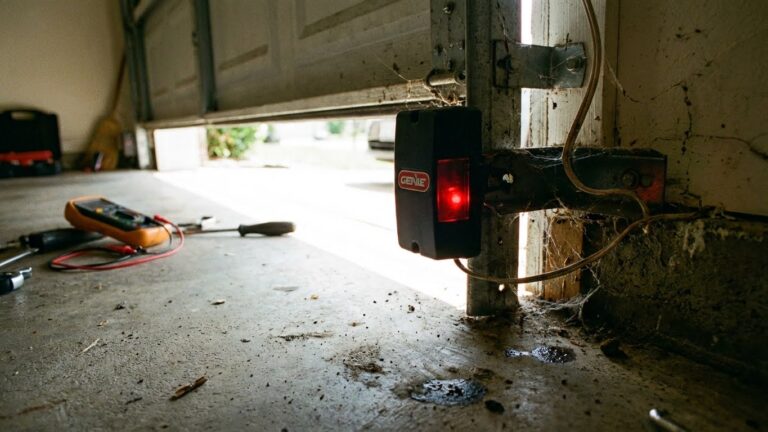
If you’ve ever pressed your garage door remote, watched the door begin to close, and then suddenly seen it reverse and open again, you’re not alone. This issue is surprisingly common and can be frustrating, especially when you’re in a hurry or concerned about security. Understanding why your garage door opens back up on its own is the first step toward fixing the problem and restoring smooth operation.
Several factors can cause this behavior, ranging from simple obstructions to more complex sensor or wiring issues. In this guide, we’ll break down the most frequent causes, how to diagnose them, and what you can do to resolve the situation safely. We’ll also point you to trusted resources for more in-depth troubleshooting and repairs.
For those who want to dive deeper into sensor wiring and troubleshooting, you may find this guide on checking garage door sensor wiring for damage especially helpful before moving on to more advanced fixes.
Common Reasons a Garage Door Reverses After Closing
When your garage door won’t stay closed and instead reverses direction, several underlying issues could be at play. Let’s look at the most typical causes and how each one can trigger this behavior.
- Obstructed Safety Sensors: Objects, dirt, or misalignment can block the sensors, causing the door to reverse as a safety precaution.
- Sensor Misalignment: If the sensors on either side of the door aren’t facing each other perfectly, the system may interpret this as an obstruction.
- Wiring Problems: Damaged or loose wires can disrupt the signal between the sensors and the opener, leading to erratic operation.
- Limit Switch Settings: If the close-limit switch is set incorrectly, the door may think it has hit an obstruction and reverse.
- Physical Obstructions: Debris or items in the door’s path will trigger the safety mechanism, causing the door to open again.
How Garage Door Safety Sensors Affect Operation
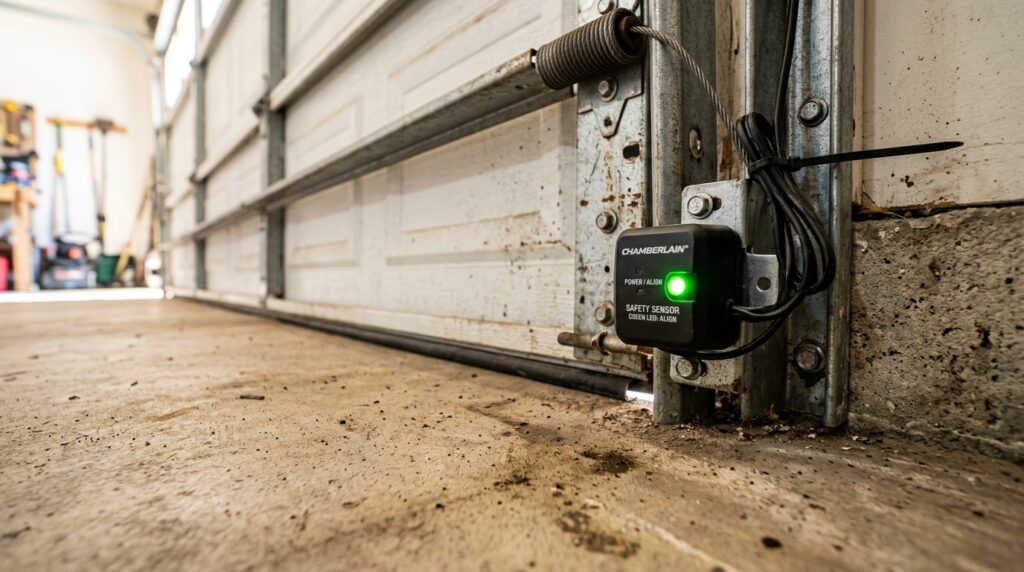
Modern garage doors use a pair of photoelectric sensors near the floor on either side of the opening. These sensors send an invisible beam across the doorway. If anything interrupts this beam, the door will not close or will reverse to prevent injury or damage.
Issues with these sensors are among the most common reasons for a door that won’t stay closed. Even a slight misalignment or a dirty lens can break the beam, leading the opener to reverse the door’s movement.
Signs of Sensor Problems
- Flashing or blinking indicator lights on the sensors
- One or both sensor lights are off
- The door only closes when you hold down the wall button
- Visible dirt or spider webs on the sensor lenses
If you notice these symptoms, cleaning and realigning the sensors is a good first step. For a step-by-step approach, see this guide on testing garage door safety sensors.
Diagnosing and Fixing Sensor and Wiring Issues
If cleaning and adjusting the sensors doesn’t solve the issue, the next step is to check for wiring problems. Damaged wires or loose connections can cause the sensors to malfunction, leading to the door reversing unexpectedly.
Inspect the wires running from the sensors to the opener. Look for visible damage, fraying, or disconnections. If you’re comfortable with DIY repairs, you can follow this guide on how to rewire garage door sensors to address any wiring faults.
Adjusting the Close-Limit Switch
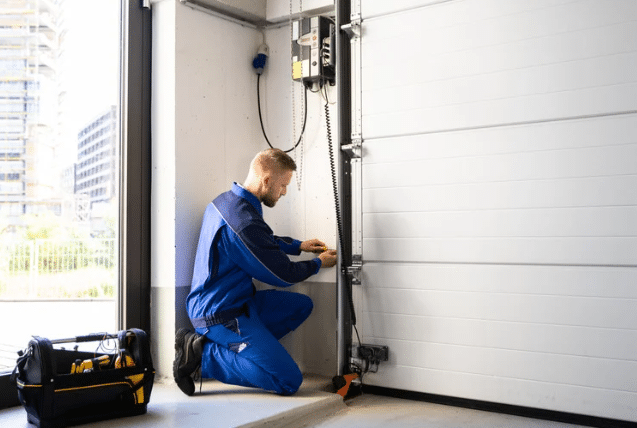
The close-limit switch tells the opener how far to lower the door. If set incorrectly, the opener may think the door has hit an object before it actually reaches the ground, causing it to reverse. Adjusting this setting is usually straightforward:
- Locate the limit adjustment screws on your opener (usually labeled “up” and “down”).
- Turn the “down” screw slightly to decrease the travel distance.
- Test the door after each adjustment until it closes fully without reversing.
For more details on related issues, such as when the door only closes if you hold the button, check out this article on why a garage door only closes when holding the button.
Other Potential Causes and Solutions
While sensors and limit switches are the most common culprits, other factors can also cause your garage door to reverse:
- Physical Obstructions: Make sure nothing is blocking the door’s path, including small objects, tools, or even ice buildup in winter.
- Track Issues: Bent or damaged tracks can prevent smooth operation, causing the opener to reverse for safety.
- Mechanical Problems: Broken springs or worn rollers can create resistance, triggering the safety mechanism.
- Opener Malfunctions: In rare cases, the opener’s circuit board or logic system may fail, requiring professional repair or replacement.
If you’ve checked all the above and the problem persists, it may be time to consult a professional technician. For those interested in bypassing sensors safely for troubleshooting, see this guide to bypass garage door sensors safely.
How to Troubleshoot Sensor Issues Effectively
Diagnosing sensor problems doesn’t have to be complicated. Start by inspecting the sensor lenses for dirt or cobwebs and clean them with a soft cloth. Make sure both sensors are facing each other and that their indicator lights are solid (not blinking).
If the lights are not solid, gently adjust the sensors until they align. If the problem continues, check the wiring for damage. For a comprehensive troubleshooting process, refer to this step-by-step guide to troubleshooting garage door sensor issues.
Frequently Asked Questions
Why does my garage door only close when I hold down the wall button?
This usually indicates a problem with the safety sensors. If the sensors are blocked, misaligned, or malfunctioning, the opener will only close the door when you override the safety feature by holding the button. Cleaning and realigning the sensors often resolves this issue.
Can I bypass the safety sensors temporarily?
While it’s possible to bypass the sensors for troubleshooting, it’s not recommended as a permanent solution due to safety risks. Always restore proper sensor function as soon as possible. For safe bypass instructions, see the guide to bypass garage door sensors safely.
How do I know if my garage door sensor is bad?
Common signs include blinking or no indicator lights, the door reversing unexpectedly, or the door only closing when the wall button is held. If cleaning and realigning the sensors doesn’t help, test the wiring and consider replacing the sensors if problems persist.